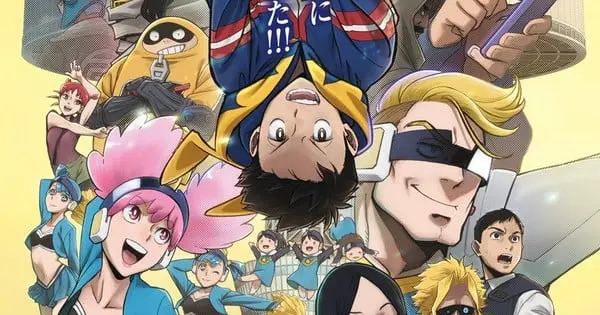

In the chaotic and often self-aware world of Gintama, the spin-off series Mr. Ginpachi’s Zany Class (also known as 3-Nen Z-Gumi Ginpachi-sensei) takes the beloved characters and transports them to a high school setting. Here, Gintoki Sakata plays the role of the perpetually unmotivated, yet surprisingly insightful, homeroom teacher, Ginpachi-sensei. Episode 11 of this comedic adaptation delivers a quintessential Gintama experience, escalating a seemingly trivial school conflict into a meta-commentary on the series itself, all while maintaining its signature brand of humor and unexpected heart.
The Premise: A Delinquent Showdown at Gintama High
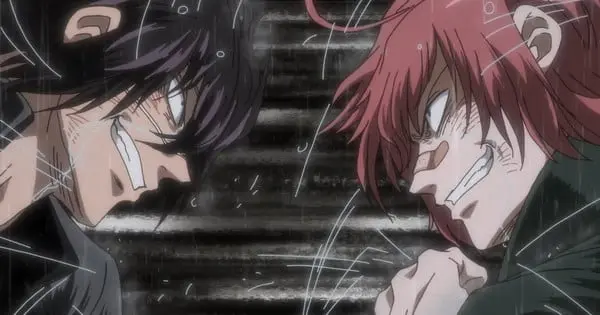
Episode 11 plunges directly into the escalating tensions between Gintama High and the rival Yato High. Following a series of skirmishes, the two schools are on the brink of an all-out gang war. Yato High is reportedly amassing 100 fighters, while Gintama High’s hopes seemingly rest on the shoulders of the angsty loner, Takasugi, and his small crew of misfits. The principal, ever eager for an excuse, sees this as an opportunity to expel Takasugi and potentially fire Ginpachi-sensei should he get involved.
Class 3-Z Rallies Behind Takasugi
As the impending conflict comes to the attention of Class 3-Z, they decide to bolster Takasugi’s forces. In a humorous display of solidarity, many students dress up as 80s delinquents, each offering their own peculiar reasons for viewing Takasugi as a comrade. This segment highlights the show’s ability to take a dramatic setup and inject it with characteristic Gintama absurdity, as characters admit they’re mostly there out of “contractual obligation.”
The Anticlimax and Meta-Narrative Twist
Just as the school brawl reaches its peak, seemingly building towards a dramatic conclusion, Ginpachi-sensei steps in with the most anticlimactic resolution possible. He effectively stops the conflict by simply “telling the teacher” on the students. When a teacher from Yato High arrives to scold his students (humorously bringing Kagura and Kamui’s father into the show), the warring factions back down, deflating the entire crisis. This abrupt and mundane resolution is a classic Gintama move, subverting audience expectations and mocking the seriousness of typical delinquent narratives.
Takasugi’s Existential Crisis
The true genius of Episode 11, however, lies in its meta-commentary, primarily through Takasugi’s reaction. Far from being upset about missing a fight, Takasugi is infuriated by the entire “delinquent shtick.” He laments having to “play up this whole delinquent shtick to begin with.” In a powerful moment of fourth-wall breaking, Takasugi expresses his belief that his story ended with the original Gintama series. He views his involvement in the spin-off as merely being “paraded around so some executives can continue to milk the franchise for more money,” declaring he would rather “burn this entire spin-off to the ground than continue the whole farce.”
This segment is a poignant, yet comedic, exploration of the nature of spin-offs and the commercialization of beloved franchises. It’s a self-aware jab that Gintama is renowned for, questioning its own existence while simultaneously entertaining its audience.
Ginpachi’s Unexpected Wisdom and Resolution
Beneath his nonchalant persona, Ginpachi-sensei demonstrates his competence, resolving the potentially violent conflict with surprising ease. The episode ultimately sees Takasugi agreeing to attend school like a normal student, effectively resolving the major conflict and hinting at a deeper character arc within the spin-off’s comedic framework. This resolution reinforces the idea that even in this chaotic spin-off, there’s a unique sense of camaraderie among Class 3-Z, redefining the meaning of “comrades” in a truly Gintama fashion.
Broader Context within the Series
Gintama: Mr. Ginpachi’s Zany Class is an anime adaptation of the light novel series of the same name, which reimagines the iconic Gintama characters in a school setting. The anime series premiered in October 2025 and Episode 11 was released on December 15, 2025, serving as the second-to-last episode of the season. Fans have praised the spin-off for its ability to maintain the original series’ humor, clever jokes, and meta-narrative elements, even within its shorter, more light-hearted format. It allows for a fresh perspective on the characters, providing moments of self-reflection and pure comedic chaos that fans have come to expect from the Gintama universe.