






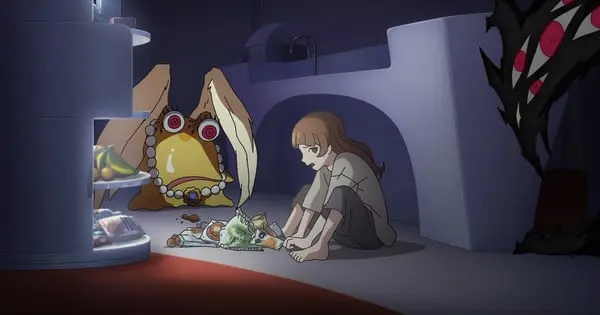
The highly anticipated ninth episode of DIGIMON BEATBREAK, titled “Utopia,” plunged viewers into a chilling exploration of manufactured happiness and the harsh realities lurking beneath a seemingly perfect society. Airing on November 29, 2025, this installment continued to deepen the cyberpunk themes of the series, offering a stark contrast between forced bliss and genuine human emotion. Fans witnessed the “Glowing Dawn” team navigate a world where true feelings are suppressed, pushing the boundaries of what it means to coexist with Digimon in a dystopian future.
Delving into the Shangri-La Egg: A City of False Perfection
“Utopia” centers its narrative around the enigmatic “Shangri-La Egg,” a walled-off district presented as a paradise where residents experience perpetual bliss. This supposed haven is powered by a “happiness pulse” enforced by a powerful Digimon named Utopium, which forcibly rewrites negative emotions into dopamine loops, ensuring constant serene smiles and perfect contentment among its citizens. The episode effectively portrays this environment as an “uncanny-valley horror,” where oversaturated colors and subtly off-human smiles create an unsettling atmosphere that belies the promised tranquility.
The core mission for Tomoro Tenma and the “Glowing Dawn” bounty hunter team is to infiltrate the Shangri-La Egg to address a Digimon incident involving a GoldNumemon. Their infiltration provides a crucial glimpse into the inner workings of this high-class, yet deeply flawed, society.
Key Characters and Their Emotional Journeys
Episode 9 brings several characters’ pasts and motivations to the forefront, creating compelling personal stakes within the larger narrative.
Makoto Kuonji and Chiropmon’s Unbreakable Bond
Makoto, a prominent member of the “Glowing Dawn” team, reveals a significant personal history tied to the Shangri-La Egg. He was born into one of its elite families but was ultimately cast out for a profound act of defiance: refusing to allow his Digimon partner, Chiropmon, to be “erased.” In Shangri-La, the emergence of a Digimon is seen as an imperfection that must be immediately rectified, highlighting the restrictive nature of its “utopia.” Despite his banishment and the loss of his privileged life, Makoto harbors no resentment, valuing Chiropmon’s life and their partnership above his former status.
Haruka and Shademon: The Price of Bitterness
Contrasting Makoto’s acceptance is the introduction of Haruka and her father, Sunny. Haruka, a former classmate of Makoto, was also expelled from Shangri-La along with her father due to a fraud case. Unlike Makoto, Haruka is deeply embittered by her circumstances, viewing her Digimon partner, Shademon, and Digimon in general, as mere tools to be exploited for survival. Her father, Sunny, reinforces this transactional view, willingly using Haruka and Shademon to navigate their life of crime. Their struggle on the fringes of society, denied re-entry into Shangri-La’s perfection, serves as a poignant reminder of the system’s unforgiving nature.
Utopium and Gekkoanarchmon: Clashing Ideologies
The embodiment of the episode’s central conflict is Utopium, a towering, angelic Digimon with a customer-service voice that broadcasts the city-wide “happiness pulse.” This entity represents the oppressive force of enforced positivity. However, the episode delivers a powerful moment of catharsis with the evolution of Tomoro’s partner, Gekkomon, into Gekkoanarchmon. This punk-rebel dragon-frog Digimon, adorned with chains and spray-paint, literally shatters the happiness halos with its roar, screaming “IT’S OKAY TO BE SAD!” This evolution symbolizes a direct rejection of forced happiness and a powerful embrace of raw, authentic emotion.
Thematic Undercurrents: Forced Positivity and Societal Critique
“Utopia” masterfully critiques the concept of forced positivity and the dangers of a society built on superficial perfection. The episode demonstrates how the “happiness pulse” affects the “Glowing Dawn” team, causing them to exhibit unsettling, blank smiles and distorted perceptions of their own traumas. Reina, for instance, smiles while shooting at nothing, and Kyo laughs maniacally at the memory of his brother’s death, showcasing the disturbing effects of this emotional suppression.
The episode’s climax sees Tomoro confronting Utopium, who attempts to ensnare him with an illusion of a “perfect” alternate life where his parents never died and the hardships he faced never occurred. Tomoro’s rejection of this fabricated paradise, choosing to “feel every scar than forget why I got them,” reinforces the episode’s message about the value of genuine experience, both joyful and sorrowful. The subsequent collapse of Utopia and the citizens’ return to a full spectrum of emotions—crying, screaming, laughing—underscores the necessity of acknowledging and processing all feelings for true human experience.
Overall, DIGIMON BEATBREAK Episode 9, “Utopia,” stands out as a compelling piece of cyberpunk fiction that goes beyond mere action to deliver a potent social commentary on the societal pressures to maintain a facade of happiness, and the profound importance of embracing one’s true emotional landscape.