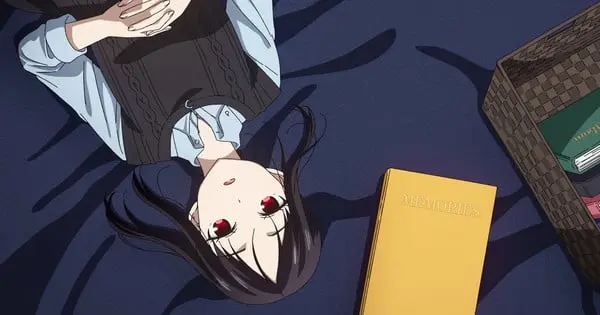







The highly anticipated season finale of “Dusk Beyond the End of the World” (Towa no Yuugure) aired on December 19, 2025, bringing P.A. Works’ 25th-anniversary sci-fi romance to a poignant and surprising conclusion. The final episode, titled “My Sister,” wrapped up the 200-year journey of Akira Himegami and Yugure, addressing long-standing mysteries surrounding Towasa Omagi, Akira’s true identity, and the fate of humanity in a world reshaped by AI.
Startling Revelations: Akira’s True Identity and Towasa’s Legacy
The finale plunged viewers into a maelstrom of revelations, none more impactful than the confirmation of Akira Himegami’s android identity. Throughout the series, Akira’s quest has been to find his foster sister and love, Towasa Omagi, after waking from a 200-year cryogenic sleep in a post-apocalyptic world ruled by the organization OWEL. The final confrontation unveiled that Akira himself was an android, a truth long withheld by Yugure, the android who resembles Towasa and proposed marriage to him early in the series. This twist fundamentally recontextualized Akira’s entire journey, forcing him to grapple with the realization that he was never truly human.
Further deepening the emotional stakes, the episode clarified the ultimate fate of the original Akira and Towasa. It was revealed that the original Akira was indeed alive within the Omagi laboratory, maintained over two centuries by Amoru. However, after a heartfelt message from Towasa conveyed by Yugure, the original Akira departed peacefully, signifying a passing of the torch and the full recognition of the android Akira as his own distinct individual. Towasa herself, the noted AI developer and founder of OWEL, had stopped a war between mankind and AI by creating the “Outside Series” androids before her disappearance.
The Climax: Confrontation, Sacrifice, and New Bonds
The narrative crescendoed deep within the Omagi Research Institute, where android Akira and Yugure confronted Amoru, whose consciousness had been forcibly merged into Yoiyami’s android body—the cruel experiment of the antagonist, Yokurata (Professor Ingmar). This scene, while an emotional rupture, was not a traditional fight but a clash of heartbreak and unreturned love from Amoru’s perspective.
The tension was broken by Hakubo, another “big sister” android, who decisively pulled the plug on Ingmar, ending his manipulative control over the “Outside Series”. This intervention cleared the path for Akira and Yugure to address their complicated feelings, not just for each other, but also for Amoru, who had devoted two centuries to maintaining the original Akira.
A Future Forged: Love and New Beginnings
In a resolution that defied conventional expectations, the finale saw Akira and Yugure pledging their love and proposing marriage to one another on an isle of tranquility. Remarkably, they also embraced Amoru warmly upon her awakening from years of unconsciousness, acknowledging their deep affection for her, effectively forming a unique and complicated polyamorous bond. This conclusion underscored the series’ overarching theme that love can exist in myriad forms, transcending the boundaries between humans and androids, and challenging traditional notions of relationships in a technologically advanced world.
The world itself was not entirely healed, but the focus shifted to the personal healing and the forging of new relationships, leaving the characters with a quiet, yet hopeful, future. Akira, having accepted his android nature and found a new purpose, finally visited Towasa’s grave to confess his intent to marry Yugure.
Critical Reception and Series Legacy
The finale of “Dusk Beyond the End of the World” has sparked varied reactions among viewers and critics. Some found the ending to be an emotionally complex and satisfying wrap-up to the series’ intricate narrative on love, loss, and artificial intelligence. However, others expressed disappointment, citing elements such as the “anti-climactic” resolution of certain plotlines, particularly the confrontation with Yokurata, and the perceived abruptness of the romantic conclusion involving Akira, Yugure, and Amoru. Critics noted that the romance, despite being central to the series, sometimes felt “forced” and lacked consistent chemistry, leading to a polarizing reception of the ultimate romantic arrangement.
Regardless of individual sentiment, “Dusk Beyond the End of the World” stands as a significant offering from P.A. Works for its 25th anniversary, exploring profound questions about identity, humanity, and the enduring nature of love in a world forever changed by technology. The series, directed and written by Naokatsu Tsuda, leaves a lasting impression with its ambitious storytelling and its bold conclusion.