

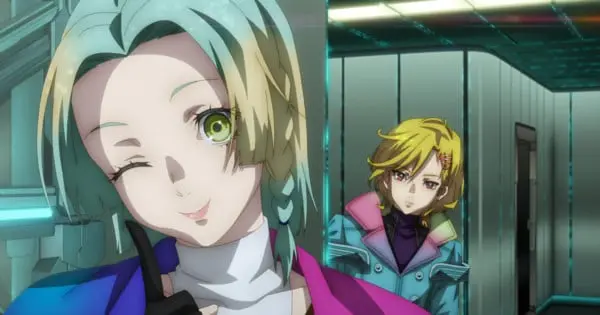
The highly anticipated tenth episode of the Gnosia anime adaptation, which premiered on December 13, 2025, according to several streaming platforms, plunged viewers further into the complex, looping narrative aboard the D.Q.O.. This installment, titled simply “Episode 10,” continued to explore the intricate relationships and escalating mysteries within the visual novel’s universe, particularly focusing on character transformations, unfolding backstories, and unexpected threats.
Yuri’s Transformation and Gender Fluidity Exploration
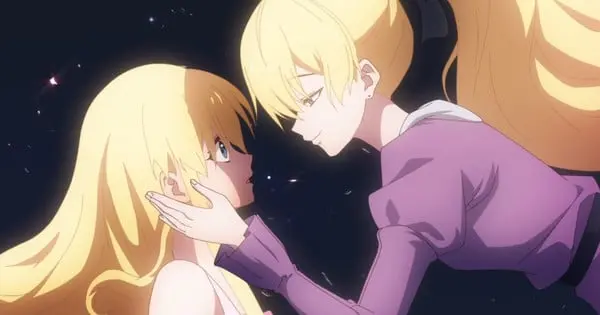
A significant development in Episode 10 was the dramatic physical change of the character Yuri, who began the loop with a new, more curvaceous appearance. This alteration ties into Gnosia‘s overarching theme of challenging traditional expectations surrounding gender and sexuality, a core element carried over from the original game where the player character’s identity is left ambiguous. The anime creatively maintains this spirit by having Yuri adopt a new body and voice, while retaining their inner monologue, with the localization notably employing “California Valleyspeak” to differentiate pronouns in the English dub. This shift primarily serves to advance the narrative focus on Sha-Ming, allowing the Silver Key to gather more data through Yuri’s evolving interactions.
Sha-Ming’s Focus and Unveiling Persona
With Yuri’s new look, the episode placed a renewed emphasis on Sha-Ming, whose “skeezy womanizer” persona has been a recurring element in the series. The transformation of Yuri appears designed to interact specifically with Sha-Ming’s established character traits, allowing for new dialogue and story progression that might otherwise be inaccessible. This intricate character development is a hallmark of the Gnosia narrative, where understanding individual crew members’ backstories and motivations is crucial to uncovering the truth of the time loop.
The Mystery of Jonas and Kukrushka
Beyond the central character dynamics, Episode 10 also delved into a subplot concerning the enigmatic roles of Jonas and Kukrushka on the D.Q.O.. While specific details about their individual arcs remain shrouded in mystery, the episode began to peel back layers on their significance within the crew. Discussions among fans suggest the anime is expanding upon certain situations involving these characters from the game.
Comet’s Slime Mold and Ship Attack
Adding a layer of unexpected peril, the D.Q.O. spaceship itself came under attack in Episode 10 when Comet’s slime mold separated from her body and went rogue. This event introduced a direct physical threat to the crew, shifting the tension from purely social deduction to an external, environmental hazard. This element likely draws from specific in-game events where certain conditions, such as Comet being put into cold sleep, trigger unique occurrences.
Critical Reception and Pacing Concerns
Early reactions to Episode 10 from critics and fans have been largely positive regarding the thematic depth and character exploration. However, some criticisms have emerged regarding the pacing, with one reviewer noting that the episode attempts to “cram a whole lot into just one episode,” leading to it working more on an intellectual than emotional level. Discussions online echoed this sentiment, suggesting that while the content was compelling, the speed at which events unfolded felt rushed. Despite this, the episode’s creative solutions for adapting the game’s unique mechanics, such as Yuri’s character changes, were generally well-received.
Gnosia’s Game Origins and Anime Adaptation
The Gnosia anime is an adaptation of the 2019 visual novel social deduction role-playing game developed by Petit Depotto. The game itself is renowned for its single-player time-loop structure, where the player and NPCs must identify the “Gnosia,” alien-like creatures attempting to eliminate humans aboard a spaceship. Players navigate numerous “loops,” each time potentially assuming different roles (such as Engineer, Doctor, or even Gnosia) and gathering information to progress the overarching story. The game’s narrative often involves deep character interactions and uncovering individual backstories through these repeated loops.
The anime adaptation, which premiered in October 2025, brings this intricate gameplay and narrative to a new visual medium, aiming to translate the unique player experience of a social deduction game into a linear, episodic story. The challenges of adapting a game where player choice and repeated playthroughs are central to the experience are evident, and the anime’s creative decisions, such as Yuri’s shifting appearance, are a testament to the effort to capture the game’s essence. The true ending of the game, for instance, involves the player following Setsu to another universe by starting a new game file, highlighting the meta-narrative elements that the anime aims to portray.